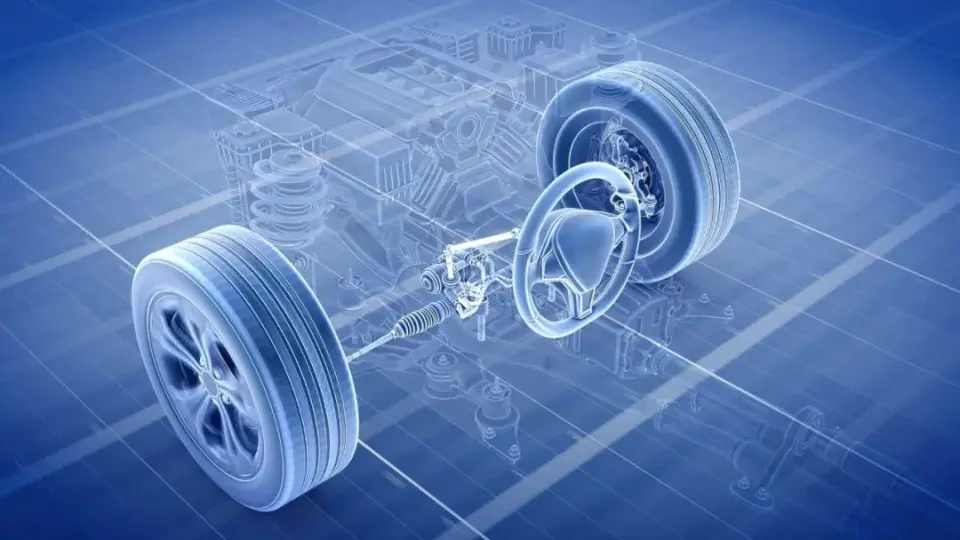
ADAS is evolving from a driver warning–oriented stage toward active vehicle control. Vehicles are no longer limited to providing alerts to the driver; instead, they are capable of actively intervening in critical scenarios to enhance safety and driving comfort. In this process, the steering system is becoming an indispensable core execution unit within ADAS systems.
New Requirements of ADAS on Steering Systems
For higher-level ADAS applications, steering systems are no longer passive components that simply respond to driver inputs. Instead, they must deliver system-level execution capability and seamless integration within the overall vehicle control architecture. These requirements are mainly reflected in the following aspects:
1. Precise Steering Angle Control
ADAS functions continuously adjust vehicle trajectories based on perception and decision-making results. This demands highly accurate steering angle control to ensure that the actual vehicle motion precisely matches ADAS control targets.
2.Fast Response with Smooth Control
During active steering interventions, systems must respond rapidly to meet the demands of emergency scenarios. At the same time, optimized control strategies are required to deliver smooth and continuous steering actions, balancing control performance with driving comfort.
3.Redundancy Design and Functional Safety
As steering systems take on increasingly critical roles in ADAS, functional safety requirements become significantly higher. Through redundancy concepts and safety mechanisms, steering systems must comply with ASIL requirements, ensuring controllability and safety even under fault conditions.
4.Deep Integration with ADAS Domain Controllers
With the industry trend toward centralized E/E architectures, steering systems must achieve efficient data exchange and coordinated control with ADAS domain controllers. This enables a closed-loop system from environment perception and decision planning to motion execution, improving overall system responsiveness and stability.
These new steering technologies and system requirements are continuously reshaping the role of steering systems in the vehicle E/E architecture, transforming them from traditional chassis components into core execution units of intelligent driving systems.
Active Steering Technology: The Execution Foundation of ADAS
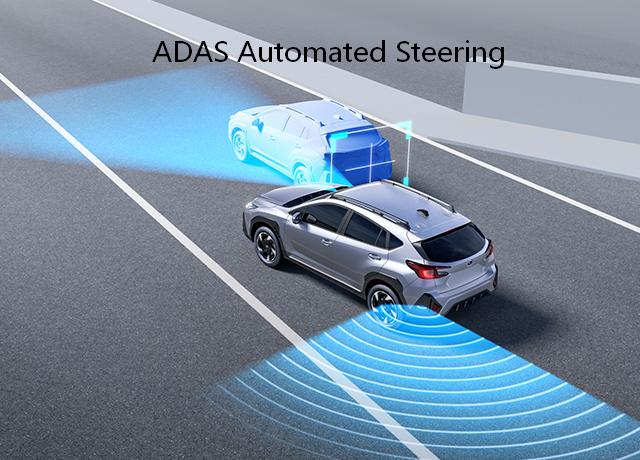
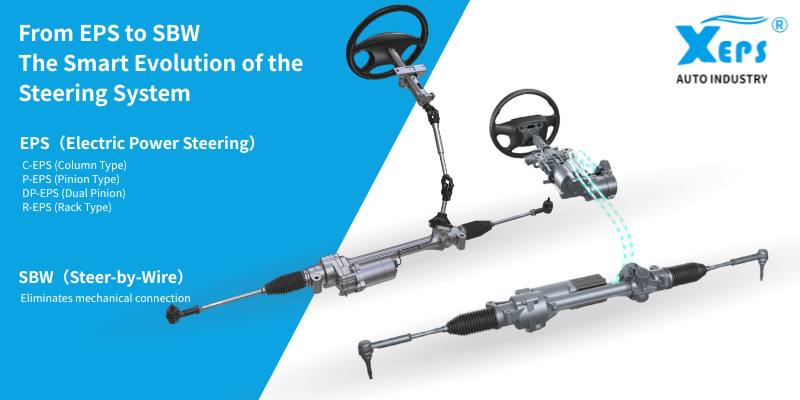
Conventional mechanical steering systems rely primarily on driver input and are unable to meet the demands of ADAS for active and precise control. With the advancement of Electric Power Steering (EPS), electronic control units (ECUs), and control algorithms, active steering technology has emerged as a critical enabler.
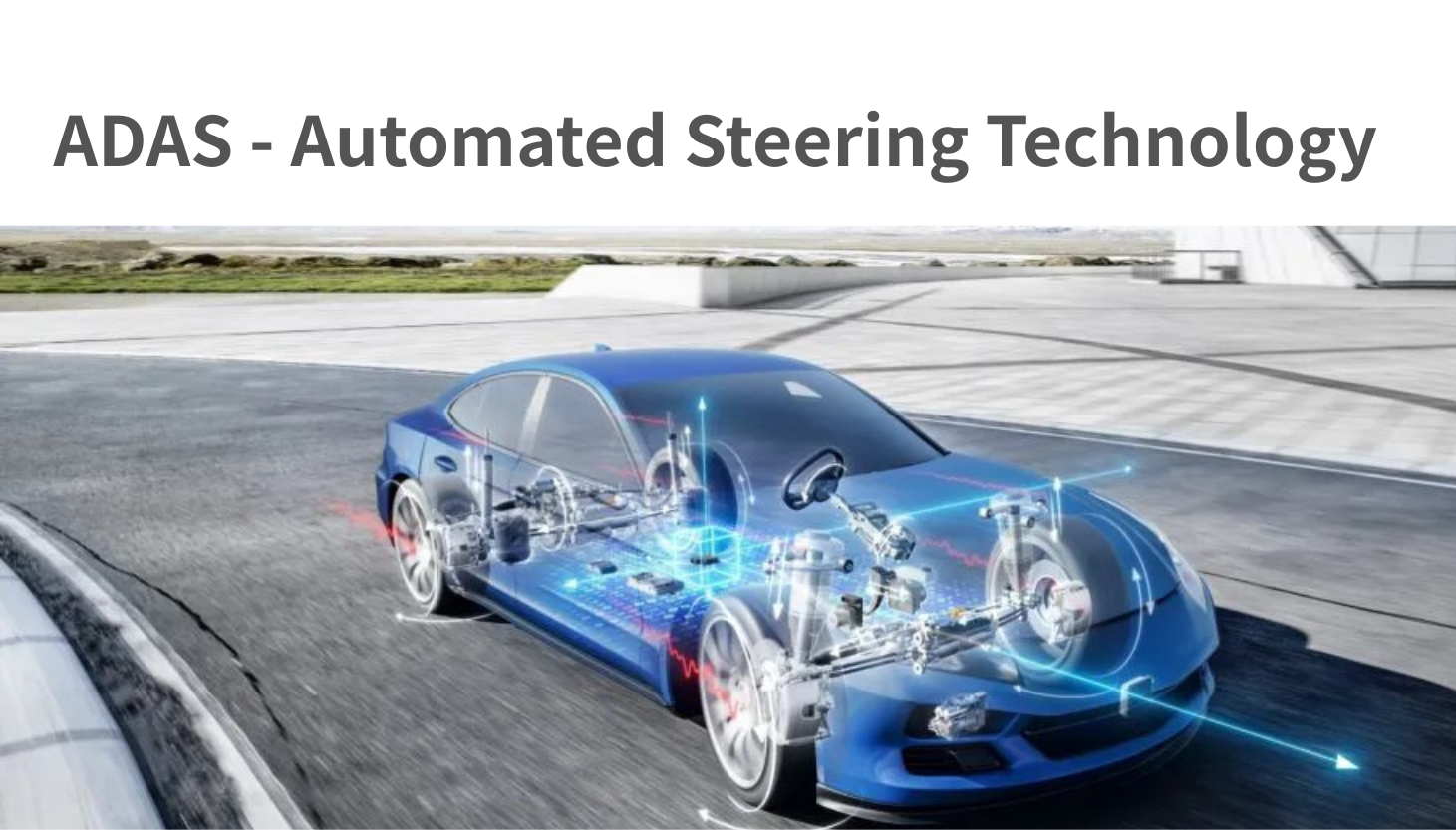
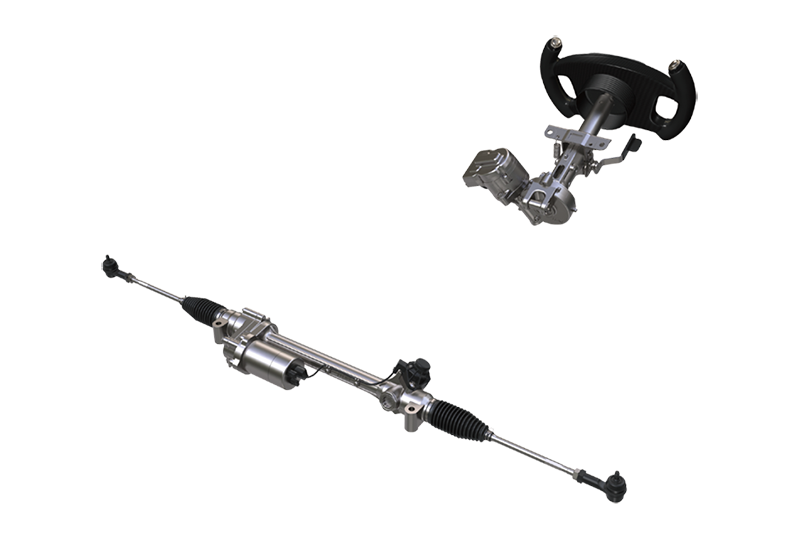
By combining EPS hardware, electric motor actuation, and advanced control algorithms, active steering systems can apply steering torque or adjust steering angles independently of driver input, based on ADAS control commands. This capability allows ADAS to truly “turn the wheels” and execute control decisions in real driving scenarios.
Active steering technology provides a solid foundation for a wide range of ADAS functions, including:
Lane Keeping Assist (LKA), Automated Parking Assist (APA), Automated Lane Change, Emergency Evasive Steering
The maturity of active steering marks a key transition of ADAS from driver assistance toward active vehicle control.
Four-Wheel Steering: An Advanced Solution for High-Level ADAS
While front-wheel active steering can meet the requirements of most basic ADAS functions, four-wheel steering (4WS) technology further extends vehicle control capabilities for more complex and higher-level intelligent driving scenarios.
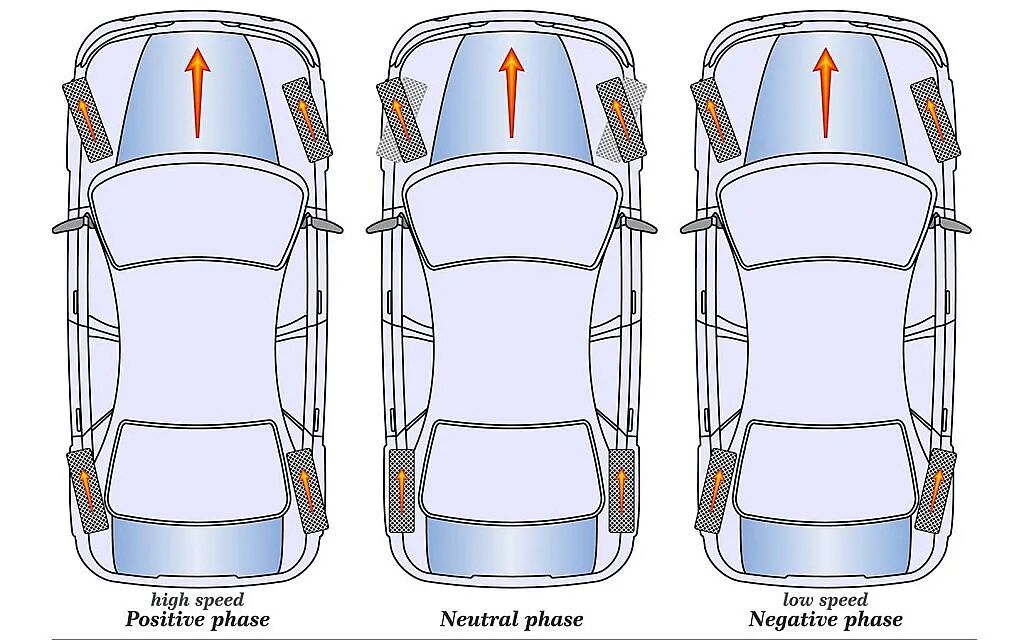
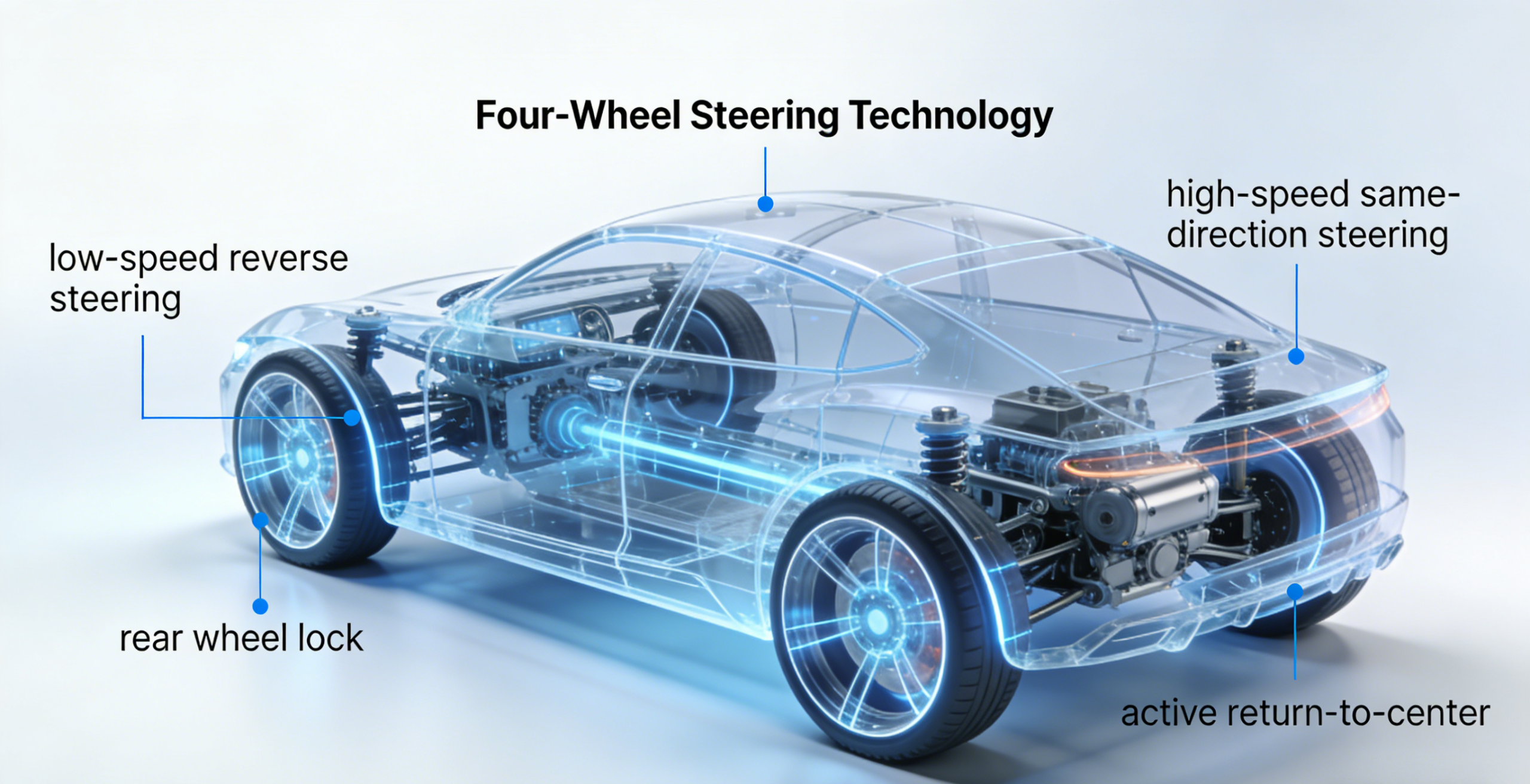
Four-wheel steering actively controls rear wheel steering angles in coordination with front wheels. At low speeds, rear wheels steer in the opposite direction to the front wheels, significantly reducing the turning radius and improving maneuverability in confined spaces. At high speeds, rear wheels steer in the same direction as the front wheels, enhancing vehicle stability and driving confidence.
As a result, four-wheel steering demonstrates clear advantages in ADAS scenarios such as automated parking, low-speed maneuvering in narrow environments, and high-speed stability control. Rather than replacing front active steering, four-wheel steering effectively expands the control boundaries and application scenarios of ADAS.
XEPS Intelligent Steering Solutions for Advanced ADAS
The continuous advancement of ADAS remains the core driving force behind the evolution of vehicle control technologies. Active steering provides the precise and reliable execution capability required by ADAS, while four-wheel steering represents a forward-looking direction for next-generation intelligent vehicles.
Currently, XEPS has completed a systematic R&D layout for advanced ADAS applications, integrating active steering and four-wheel steering technologies.
Beyond four-wheel steering, XEPS ADAS-ready steering systems also support rear-wheel lock functions and automatic steering wheel return, enabling precise and stable control across diverse driving scenarios.
By enabling deep collaboration between steering systems and ADAS architectures, XEPS is committed to delivering forward-looking intelligent steering solutions and accelerating the safe deployment and performance enhancement of intelligent driving technologies.
Watch the video to learn more about XEPS’s ADAS steering technolgy.

01.png)